<?xml version="1.0" encoding="UTF-8"?>
<rss version="2.0"
	xmlns:content="http://purl.org/rss/1.0/modules/content/"
	xmlns:wfw="http://wellformedweb.org/CommentAPI/"
	xmlns:dc="http://purl.org/dc/elements/1.1/"
	xmlns:atom="http://www.w3.org/2005/Atom"
	xmlns:sy="http://purl.org/rss/1.0/modules/syndication/"
	xmlns:slash="http://purl.org/rss/1.0/modules/slash/"
	>

<channel>
	<title>eurodad</title>
	<atom:link href="http://eurodad.org/?feed=rss2" rel="self" type="application/rss+xml" />
	<link>http://eurodad.org</link>
	<description>Eurodad</description>
	<lastBuildDate>Wed, 16 May 2012 14:06:20 +0000</lastBuildDate>
	<language>en</language>
	<sy:updatePeriod>hourly</sy:updatePeriod>
	<sy:updateFrequency>1</sy:updateFrequency>
			<item>
		<title>Joint CSO submission to the consultation on proposed EU Platform for External Cooperation and Development</title>
		<link>http://eurodad.org/?p=1542952</link>
		<comments>http://eurodad.org/?p=1542952#comments</comments>
		<pubDate>Wed, 16 May 2012 13:26:13 +0000</pubDate>
		<dc:creator>CarlosVillota</dc:creator>
				<category><![CDATA[Aid]]></category>
		<category><![CDATA[News]]></category>

		<guid isPermaLink="false">http://eurodad.org/?p=1542952</guid>
		<description><![CDATA[...By Counter Balance, Eurodad, Green Alternative Georgia, We welcome the intention to improve coordination of EU development and external cooperation actions. However we urge the Group of Experts (GoE) to take a step back and reflect on the key concerns &#8230; <a href="http://eurodad.org/?p=1542952"><span class="meta-nav">&#8594;</span></a>]]></description>
			<content:encoded><![CDATA[<p style="text-align: justify;">By Counter Balance, Eurodad, Green Alternative Georgia,</p>
<p style="text-align: justify;">We welcome the intention to improve coordination of EU development and external cooperation actions. However we urge the Group of Experts (GoE) to take a step back and reflect on the key concerns that stakeholders have raised, and ensure a proper evaluation is done of current operations before proceeding: a preliminary decision must not be rushed.</p>
<p style="text-align: justify;">We would like to bring to the attention of the GoE the following key issues, detailed in the main sections of this submission:</p>
<ul style="text-align: justify;">
<li>The purpose and added value of the proposed Platform – development impacts must be properly assessed, stakeholder views considered, and objectives rethought – in particular by not mixing development objectives with other objectives such as visibility.</li>
<li>Blending – is this the answer? – There are a number of key concerns, including: the risk of financial incentives outweighing development principles; insufficient attention to transparency and accountability; unclear monitoring and evaluation methods; opportunity costs may be high, but are not carefully considered; and there are debt risks for developing countries of increasing lending.</li>
</ul>
<p style="text-align: justify;">We have also included annexes on lessons learned from the Neighbourhood Investment Facility (NIF) and the Tblisi railway bypass project.</p>
<p style="text-align: justify;">The main purpose of the expert group as established by the GoE is to identify the “potential benefits and costs (value added) of establishing such a Platform”, including identifying the stakeholders and then propose recommendations for the establishment or not of such Platform. However, we are concerned that the platform will be created regardless of the findings and that its key objectives will be to help establish new blending facilities, while enhancing EU visibility, rather than considering carefully the development benefits.</p>
<p style="text-align: justify;">Read the full <a href="http://eurodad.org/wp-content/uploads/2012/05/Joint-CSO-submission-to-Consultation-of-EU-Platform-forExternal-Cooperation-and-Development.pdf">Joint CSO submission to the consultation on proposed EU Platform for External Cooperation and Development</a></p>]]></content:encoded>
			<wfw:commentRss>http://eurodad.org/?feed=rss2&#038;p=1542952</wfw:commentRss>
		<slash:comments>0</slash:comments>
		</item>
		<item>
		<title>Civil society helps secure positive outcome of UNCTAD XIII</title>
		<link>http://eurodad.org/?p=1540853</link>
		<comments>http://eurodad.org/?p=1540853#comments</comments>
		<pubDate>Fri, 04 May 2012 08:55:22 +0000</pubDate>
		<dc:creator>CarlosVillota</dc:creator>
				<category><![CDATA[Debt]]></category>
		<category><![CDATA[Financial architecture]]></category>
		<category><![CDATA[IFIs]]></category>
		<category><![CDATA[News]]></category>
		<category><![CDATA[Responsible finance]]></category>
		<category><![CDATA[Responsible lending]]></category>
		<category><![CDATA[debt]]></category>
		<category><![CDATA[UNCTAD]]></category>

		<guid isPermaLink="false">http://eurodad.org/?p=1540853</guid>
		<description><![CDATA[...By Carlos Villota, The XIII United Nations Conference on Trade and Development (UNCTAD) took place in Doha, Qatar between 21-26 April. The Final Declaration &#8211; approved by the developing and developed countries alike &#8211; acknowledges the impact of the financial &#8230; <a href="http://eurodad.org/?p=1540853"><span class="meta-nav">&#8594;</span></a>]]></description>
			<content:encoded><![CDATA[<p style="text-align: justify;"><strong>By Carlos Villota,</strong></p>
<p style="text-align: justify;"><a href="http://unctadxiii.org/en/pages/home.aspx">The XIII United Nations Conference on Trade and Development (UNCTAD)</a> took place in <st1:city><st1:place><st1:city>Doha</st1:city>, <st1:country-region>Qatar</st1:country-region></st1:place></st1:city> between 21-26 April. The <a href="http://unctadxiii.org/en/Pages/home.aspx">Final Declaration</a> &#8211; approved by the developing and developed countries alike &#8211; <strong>acknowledges the impact of the financial crisis and highlights the need for adequate regulation of this sector</strong>. It also includes a strong mandate for UNCTAD&#8217;s vital work which includes analyzing  the financial crisis and the related social crisis it has created.</p>
<p style="text-align: justify;"><strong>The global financial and economic crisis and its continuing dramatic consequences for people and countries have highlighted the importance of UNCTAD´s work.</strong> ‘In fact, UNCTAD is well known for having predicted the crisis in advance, a fact that is to be commended, particularly given its paucity of resources compared to institutions such as the International Monetary Fund (IMF), the World Trade Organization (WTO), and the Organisation for Economic Co-operation and Development (OECD), which failed to do so’<a href="file:///Y:/Eurodad%20outputs/Development%20Finance%20Watch%20newsletter/2012/May/UNCTAD%2013%20article%20agm.docx#_ftn1" title="">[1]</a>. It was UNCTAD and not the Bretton Woods Institutions who stressed the dangers uncontrolled markets and financial liberalisation and deregulation. These are precisely the problems at the root of the current financial crisis.</p>
<p style="text-align: justify;"><strong>The final Declaration provides support for a strong mandate for UNCTAD</strong><st1:personname>&#8216;</st1:personname><strong>s vital work on financial and related crises.</strong> Nevertheless, this was not easy to achieve. Throughout the negotiations leading up to UNCTAD XIII, the <b>d</b><strong>eveloped countries tried to rescind the important mandate of UNCTAD to work on issues of global macroeconomic and finance policies, and particularly to participate in global governance on these issues</strong>, which are so essential to global prosperity. Both the JUSSCKANZ group of countries (<st1:country-region><st1:personname>Japan</st1:personname></st1:country-region>, <st1:country-region><st1:personname>USA</st1:personname></st1:country-region>, <st1:country-region><st1:personname>Switzerland</st1:personname></st1:country-region>, <st1:country-region><st1:personname>Canada</st1:personname></st1:country-region>, <st1:country-region><st1:personname>Korea</st1:personname></st1:country-region>, <st1:country-region><st1:personname>Australia</st1:personname></st1:country-region> and <st1:country-region><st1:place><st1:personname>New Zealand</st1:personname></st1:place></st1:country-region>) and the European Union were opposed to UNCTAD´s mandate of conducting vital analytical and advisory work on finance and responses to the crisis<b>.</b> <strong>They were even refusing to reaffirm UNCTAD´s mandate as agreed in </strong><a href="ww.unctadxii.org/en/"><st1:city><st1:place><st1:personname>Accra</st1:personname></st1:place></st1:city> </a>(April 2008).</p>
<p style="text-align: justify;"><strong>CSOs position during the conference was key in order to achieve a progressive final declaration.</strong> During the conference, civil society groups offered incisive analysis on key issues under negotiation within to the conference theme of inclusive and sustainable development conference. Some Eurodad members like <a href="http://www.actionaid.org/">ActionAid International</a> and <a href="http://www.slettgjelda.no/no/english/">SLUG</a> together with other allies like <a href="http://www.ituc-csi.org/IMG/pdf/ituc_statement_to_unctad_xiii_-_final.pdf" target="_hplink">The International Trade Union Confederation</a>, <a href="http://www.taxjustice.net/">Tax Justice Network</a>, <a href="http://www.ourworldisnotforsale.org/">Our World Is Not For Sale network</a> and other groups convened side events on issues of <a href="http://www.csfunctad13.org/news_details.php?id=46" target="_hplink">investment</a>, <a href="http://www.csfunctad13.org/news_details.php?id=49" target="_hplink">financial regulation</a>, the WTO, debt, tax policy, <a href="http://www.iatp.org/blog/201204/defending-unctad%E2%80%99s-role-in-agriculture-and-food-security" target="_hplink">food security</a>, and the <a href="http://www.csfunctad13.org/news_details.php?id=48" target="_hplink">social protection floor</a>. Moreover, CSOs closely monitored the official negotiations and so were able to take action to protect UNCTAD’s mandate and have its previous key achievements recognised in the final document with respect key areas of work -such as the financial crisis, macroeconomic policy, debt management, the World Trade Organization (WTO) and other trade agreements, intellectual property, industrial policy, investment and other issues.</p>
<p style="text-align: justify;"><strong>As a result, the outcomes of the UNCTAD XIII contribute to the transformations of the global economy that are necessary for true inclusive and sustainable development for all</strong>. One of the most contested paragraphs -17(d)- calls for UNCTAD to ‘continue, as a contribution to the work of the UN, research and analysis on the prospects of, and impact on, developing countries in matters of trade and development, in light of the global economic and financial crisis’. While this mandate could have been broader, negotiators in the G77 group of over 100 developing countries -together with civil society support- were able to push it through and wouldn&#8217;t back down. Civil Society groups celebrate that this language gives a clear mandate to UNCTAD to continue its excellent and highly lauded work on the global economic crisis.</p>
<p style="text-align: justify;"><strong>For the billions of people around the world who suffer the consequences of the current global economics system the final Declaration of the conference has been positive. This is an important achievement especially considering the determined opposition of some of the developed countries during the negotiation process.</strong></p>
<div><hr align="left" size="1" width="33%" />
<div>
<p><a href="file:///Y:/Eurodad%20outputs/Development%20Finance%20Watch%20newsletter/2012/May/UNCTAD%2013%20article%20agm.docx#_ftnref1" title="">[1]</a> <a href="http://www.iatp.org/files/OWINFS%20Sign-on%20UNCTAD%20XIII%20Declaration%20April%2023-2012%20ENG.pdf">Civil Society Organization letter to Governments and Negotiators at the UNCTAD XIII</a></p>
</div>
</div>]]></content:encoded>
			<wfw:commentRss>http://eurodad.org/?feed=rss2&#038;p=1540853</wfw:commentRss>
		<slash:comments>0</slash:comments>
		</item>
		<item>
		<title>Beyond our borders. A critique of the external dimension of the EU energy policy and its financing mechanisms</title>
		<link>http://eurodad.org/?p=1540683</link>
		<comments>http://eurodad.org/?p=1540683#comments</comments>
		<pubDate>Fri, 04 May 2012 08:40:10 +0000</pubDate>
		<dc:creator>CarlosVillota</dc:creator>
				<category><![CDATA[IFIs]]></category>
		<category><![CDATA[Reports]]></category>
		<category><![CDATA[Responsible finance]]></category>
		<category><![CDATA[energy]]></category>
		<category><![CDATA[EU]]></category>

		<guid isPermaLink="false">http://eurodad.org/?p=1540683</guid>
		<description><![CDATA[...Eurodad member CRBM has released a new report on EU energy policy and its financing mechanisms. When it comes to EU energy policies, particularly those that guide the relationships with neighbouring countries, Europe at times displays characteristics similar to the self-absorbed stubbornness &#8230; <a href="http://eurodad.org/?p=1540683"><span class="meta-nav">&#8594;</span></a>]]></description>
			<content:encoded><![CDATA[<p>Eurodad member <a href="http://www.crbm.org/">CRBM</a> has released a new report on EU energy policy and its financing mechanisms.</p>
<p>When it comes to EU energy policies, particularly those that guide the relationships with neighbouring countries, Europe at times displays characteristics similar to the self-absorbed stubbornness of a child who doesn’t play nicely with his schoolmates.</p>
<p>Read the full report: <a href="http://www.counterbalance-eib.org/wp-content/uploads/2012/04/BEYOND-OUR-BORDERS.pdf">Beyond our borders. A critique of the external dimension of the EU energy policy and its financing mechanisms</a></p>
<p><iframe width="560" height="315" src="http://www.youtube.com/embed/Aeba2vBeJYQ" frameborder="0" allowfullscreen=""></iframe></p>]]></content:encoded>
			<wfw:commentRss>http://eurodad.org/?feed=rss2&#038;p=1540683</wfw:commentRss>
		<slash:comments>0</slash:comments>
		</item>
		<item>
		<title>Fair rules on debt: developing countries try to force the IMF’s hand</title>
		<link>http://eurodad.org/?p=1540353</link>
		<comments>http://eurodad.org/?p=1540353#comments</comments>
		<pubDate>Fri, 04 May 2012 08:20:19 +0000</pubDate>
		<dc:creator>CarlosVillota</dc:creator>
				<category><![CDATA[Blog]]></category>
		<category><![CDATA[Debt]]></category>
		<category><![CDATA[Financial architecture]]></category>
		<category><![CDATA[IFIs]]></category>
		<category><![CDATA[Responsible finance]]></category>
		<category><![CDATA[Responsible lending]]></category>
		<category><![CDATA[debt]]></category>
		<category><![CDATA[imf]]></category>
		<category><![CDATA[spring meetings]]></category>

		<guid isPermaLink="false">http://eurodad.org/?p=1540353</guid>
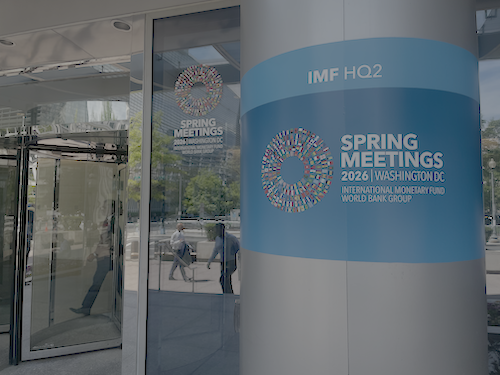
		<description><![CDATA[...By Francesca Giubilo, 27-04-2012 At last week’s World Bank and IMF spring meetings, the G24, the group of developing countries governments made a bold bid to get debt work-out mechanisms back on the agenda. They called for a study on &#8230; <a href="http://eurodad.org/?p=1540353"><span class="meta-nav">&#8594;</span></a>]]></description>
			<content:encoded><![CDATA[<p style="text-align: justify;"><strong>By Francesca Giubilo,</strong></p>
<p style="text-align: justify;"><strong>27-04-2012</strong></p>
<p style="text-align: justify;">At last week’s World Bank and IMF spring meetings, the G24, the group of developing countries governments made a bold bid to get debt work-out mechanisms back on the agenda. They called for a study on sovereign debt restructuring mechanisms, a topic which the IMF had ignored. The European debt crisis provided an opportunity to re-open the debate.</p>
<p style="text-align: justify;">Though the G24 call was not echoed in the International Monetary and Financial Committee’s statement, it was an important first step which shows how the problem of <strong>unpayable and illegitimate <a href="http://eurodad.org/?p=1128313">debt is increasing at international level</a></strong>. Civil society groups have constantly argued that new measures have to be taken to deal with sovereign debt problems, but <strong>why is this so important for low-income countries and which elements should be included in a debt work-out mechanism?</strong></p>
<p style="text-align: justify;">Although some of the effects of the financial crisis in low-income countries may have been mitigated by previous debt relief initiatives and a stronger focus on debt sustainability, almost <strong>one third of all low-income countries are either in debt distress or at high risk</strong> according to IMF data. In addition, the IMF predicts a permanent increase in the share of low-income countries revenues spent on servicing external debt. The consequences in terms of <b>quantity and type of debt</b> are hardly being analysed and no international procedure or mechanism exists to deal fairly and comprehensively with cases of debt distress.</p>
<p style="text-align: justify;">A fair and transparent sovereign debt work-out procedure should include the <a href="http://eurodad.org/uploadedfiles/whats_new/reports/eurodad%20debt%20workout%20principles_final.pdf">10 civil society principles</a>, which help countries deal objectively with allegations of illegitimate debt. Furthermore, it will not only serve to deal with debt after the fact, but will also discipline lenders and promote more responsible lending and borrowing before loans are agreed.</p>
<p style="text-align: justify;">As stressed in the Eurodad <a href="http://eurodad.org/uploadedfiles/whats_new/reports/charter_final_23-11.pdf">Charter on Responsible Finance</a>, <b>a </b><strong>fair and binding framework for responsible finance at the international level</strong> would provide a rules-based system which:</p>
<ul style="text-align: justify;">
<li>lays out the rights and the obligations of lenders and investors, borrowers and host states</li>
<li>protects the rights and welfare of citizens around the world</li>
</ul>
<p style="text-align: justify;">We will keep our eyes fixed on the new opportunities to put this issue back on the IMF’s agenda and push for changes. History bears testimony to many seemingly impossible turnarounds maybe another one is around the corner. <strong>We will continue fighting!</strong></p>]]></content:encoded>
			<wfw:commentRss>http://eurodad.org/?feed=rss2&#038;p=1540353</wfw:commentRss>
		<slash:comments>0</slash:comments>
		</item>
		<item>
		<title>Dialogues on development in a time of change</title>
		<link>http://eurodad.org/?p=1540157</link>
		<comments>http://eurodad.org/?p=1540157#comments</comments>
		<pubDate>Fri, 04 May 2012 08:12:56 +0000</pubDate>
		<dc:creator>CarlosVillota</dc:creator>
				<category><![CDATA[Aid]]></category>
		<category><![CDATA[Debt]]></category>
		<category><![CDATA[News]]></category>
		<category><![CDATA[Private finance]]></category>
		<category><![CDATA[Responsible finance]]></category>
		<category><![CDATA[Tax justice]]></category>
		<category><![CDATA[debt]]></category>
		<category><![CDATA[ODG]]></category>

		<guid isPermaLink="false">http://eurodad.org/?p=1540157</guid>
		<description><![CDATA[...Jeroen Kwakkenbos, Eurodad Policy and Advocacy Officer, together with Iolanda Fresnillo, from Eurodad member organization ODG spoke in Madrid in the confrence &#8216;Dialogues on development in a time of change&#8216; organized by Plataforma 2015 y más.]]></description>
			<content:encoded><![CDATA[<p style="text-align: justify;">Jeroen Kwakkenbos, Eurodad Policy and Advocacy Officer, together with Iolanda Fresnillo, from Eurodad member organization <a href="http://eng.odg.cat/">ODG</a> spoke in Madrid in the confrence &#8216;<a href="http://www.2015ymas.org/spip.php?article632">Dialogues on development in a time of change</a>&#8216; organized by <a href="http://www.2015ymas.org/">Plataforma 2015 y más</a>.</p>
<p style="text-align: justify;"><iframe width="560" height="315" src="http://www.youtube.com/embed/BwM6becFQhI" frameborder="0" allowfullscreen=""></iframe></p>]]></content:encoded>
			<wfw:commentRss>http://eurodad.org/?feed=rss2&#038;p=1540157</wfw:commentRss>
		<slash:comments>0</slash:comments>
		</item>
		<item>
		<title>Investing in financial intermediaries: a way to fill the gaps in public climate finance?</title>
		<link>http://eurodad.org/?p=1540077</link>
		<comments>http://eurodad.org/?p=1540077#comments</comments>
		<pubDate>Fri, 04 May 2012 07:57:42 +0000</pubDate>
		<dc:creator>CarlosVillota</dc:creator>
				<category><![CDATA[Financial architecture]]></category>
		<category><![CDATA[IFIs]]></category>
		<category><![CDATA[News]]></category>
		<category><![CDATA[Responsible finance]]></category>
		<category><![CDATA[climate finance]]></category>

		<guid isPermaLink="false">http://eurodad.org/?p=1540077</guid>
		<description><![CDATA[...By Diana Hulova, Large amounts of money are needed to address the impacts of climate change. If we succeed in limiting global warming to 2°C, this will still require as much as USD 275 billon. A new report released by &#8230; <a href="http://eurodad.org/?p=1540077"><span class="meta-nav">&#8594;</span></a>]]></description>
			<content:encoded><![CDATA[<p style="text-align: justify;"><strong>By Diana Hulova,</strong></p>
<p style="text-align: justify;">Large amounts of money are needed to address the impacts of climate change. If we succeed in limiting global warming to 2°C, this will still require as much as USD 275 billon. A <a href="http://eurodad.org/?p=1345788">new report</a> released by Eurodad calls into question the latest desperate initiative of donors to fill the gaps in public climate finance: investing in the private sector with the aim of leveraging additional funds.</p>
<p style="text-align: justify;">Rich countries promised to mobilise resources to help developing countries deal with climate challenges. However, they are failing to meet their commitments. According to the <u><a href="http://www.wri.org/publication/summary-of-developed-country-fast-start-climate-finance-pledges">World Resource Institute’s preliminary analysis of the Copenhagen’s Fast Start pledges</a></u>, not more than half of the USD 30 billion pledged to be provided between 2010-2012 has been accounted for, and it is not yet clear how much of this money has been or will be delivered.</p>
<p style="text-align: justify;">The report published by Eurodad focuses on <a href="http://en.wikipedia.org/wiki/Financial_intermediary">financial intermediaries</a>, one of the main tools to leverage private funds. According to many Development Finance Institutions (DFIs), financial intermediaries, such as banks, insurance companies or private equity funds have the ability to use public money to overcome the barriers to private investments in developing countries and leverage substantial amounts of private money. For instance, the public money that is invested in a local bank should make the institution stronger and more profitable, hence attracting more private capital.</p>
<p style="text-align: justify;"><strong>The report questions the ability of financial intermediaries to raise several times more money than originally invested, as claimed by DFIs. It also raises serious concerns about the climate effectiveness of these tools.</strong></p>
<p style="text-align: justify;">Donor governments committed, under <a href="http://unfccc.int/resource/docs/convkp/conveng.pdf">the principle of common but differentiated responsibility</a>, to help developing countries shoulder the costs of addressing climate challenges. It seems logical, that the most vulnerable sectors and countries are prioritised. However, the report finds that <strong>financial intermediaries are likely to by-pass small and local businesses in low-income countries, where the help is most needed</strong>. After assessing the portfolios of several DFIs, <a href="http://eurodad.org/">Eurodad</a> concludes that almost no money reaches low-income countries or smallholders. The real problem is that most of the investment instruments are much more likely to reach large multinational companies rather than SMEs. The fact that the average size of loans provided by the IMF is above EUR 15 million only confirms this.</p>
<p style="text-align: justify;">Monitoring the impact and holding intermediaries accountable for their use of funds are also major challenges. DFIs usually rely on financial intermediaries’ self-reporting <b>and </b><strong>very little information is available on the use of taxpayer’s money.</strong> The transparency of investments is further diminished by the fact that many of the financial intermediaries are registered in tax havens and do not comply with adequate transparency and accountability requirements.</p>
<p style="text-align: justify;">Given these gaps and the lack of clarity with regards to the climate impacts of investing in financial intermediaries, donor governments should think twice before relying on intermediaries. Private climate finance should by no means dilute the rich country’s commitments to help developing countries respond to climate challenges.</p>
Download the report “<a href="http://eurodad.org/?p=1345788">Cashing in on climate change?</a>”]]></content:encoded>
			<wfw:commentRss>http://eurodad.org/?feed=rss2&#038;p=1540077</wfw:commentRss>
		<slash:comments>0</slash:comments>
		</item>
		<item>
		<title>The European Parliament wants stronger measures against tax evasion</title>
		<link>http://eurodad.org/?p=1539913</link>
		<comments>http://eurodad.org/?p=1539913#comments</comments>
		<pubDate>Fri, 04 May 2012 07:51:26 +0000</pubDate>
		<dc:creator>CarlosVillota</dc:creator>
				<category><![CDATA[Capital flight]]></category>
		<category><![CDATA[Domestic resource mobilisation]]></category>
		<category><![CDATA[News]]></category>
		<category><![CDATA[Tax justice]]></category>
		<category><![CDATA[CBC]]></category>
		<category><![CDATA[CCCTB]]></category>
		<category><![CDATA[Ep]]></category>
		<category><![CDATA[tax]]></category>

		<guid isPermaLink="false">http://eurodad.org/?p=1539913</guid>
		<description><![CDATA[...By Alex Marriage, The European Parliament voted through a resolution calling for measures against tax evasion. The resolution was passed with an overwhelming 538 votes in favour, and only 73 against and 32 abstentions. The resolution of 19 April goes &#8230; <a href="http://eurodad.org/?p=1539913"><span class="meta-nav">&#8594;</span></a>]]></description>
			<content:encoded><![CDATA[<p><strong>By Alex Marriage,</strong></p>
<p>The European Parliament voted through a<strong> resolution calling for measures against tax evasion. </strong>The resolution was passed with an overwhelming <strong>538 votes in favour, and only 73 against and 32 abstentions.</strong> <a href="http://www.europarl.europa.eu/sides/getDoc.do?type=TA&amp;reference=P7-TA-2012-0137&amp;language=EN&amp;ring=B7-2012-0203">The resolution of 19 April</a> goes far in echoing Eurodad’s demand in calling for Automatic Information Exchange (AIE), Country-By-Country Reporting (CBCR), a mandatory <a href="http://eurodad.org/?p=4688">Common Consolidated Corporate Tax Base (CCCBT)</a> amongst other useful suggestions.</p>
<p><strong><span style="text-decoration: underline;">Single EU tax base for companies: </span></strong></p>
<p><strong>The resolution calls for a mandatory Common Consolidated Corporate Tax Base (CCCTB)</strong> This would create a single European standard for what income is taxable and what is exempt. Taxable income would then be split between the countries where the company operates on the basis of the real economic activity that takes place within those countries (calculated by looking at staff levels and other factors). Compulsory CCCTB would be a major step in the fight against transfer pricing abuse ensuring more income is taxed where it is actually made<b>.</b> The European Commission has a proposal to introduce CCCTB on a voluntary basis for countries and companies an approach which would make tax competition worse, unlike the mandatory approach Parliament asks which would improve the situation.</p>
<p><strong><span style="text-decoration: underline;"><a href="http://www.financialtaskforce.org/issues/automatic-tax-information-exchange/">Automatic exchange of tax information </a></span></strong></p>
<p>Importantly, the resolution also calls for domestic tax authorities to cooperate and share information more. With the aim of ending bank secrecy, the Parliament supports extending the scope of <a href="http://www.taxjustice.net/cms/upload/pdf/EUSTD-TJN-Briefing_-_JAN-2011.pdf">the European Savings Tax Directive</a> which now provides for information sharing but only on some topics. The declaration  implicitly criticises the unilateral approach of the EU Member States who undermined potential cooperation on information sharing by concluding so-called <a href="http://eurodad.org/?p=4647">Rubik</a> deals with Switzerland, namely Germany, the UK and more recently <a href="http://eurodad.org/?p=1358761">Austria</a>.</p>
<p><strong><u>The European Parliament can make country-by-country reporting standards stronger</u></strong></p>
<p>Members of the European Parliament have an instrumental role in ensuring that the current review of the EU transparency and accounting directives tackle tax dodging by multinational companies and include a development perspective.</p>
<p>The background is that the EU is considering introducing a form of country-by-country reporting. While this is a big step in the right direction, the EU proposal is limited to addressing corruption only, not tax dodging. As it stands, it only requires disclosure of what a company pays to governments, and not how much it makes and what therefore what it <i>should</i> pay. The Parliament seems likely to strengthen the proposal to include information on companies’ financial performance needed to tackle tax dodging as it voted overwhelmingly in favour of this statement.</p>
<p><a href="http://www.europarl.europa.eu/sides/getDoc.do?pubRef=-//EP//NONSGML+TA+20120419+SIT+DOC+WORD+V0//EN&amp;language=EN">“recalls that country-by-country reporting requirements for cross-border companies are essential for detecting corporate tax avoidance”</a></p>
<p><strong><span style="text-decoration: underline;">Revealing who really owns companies and bank accounts</span></strong></p>
<p>Individuals with something to hide can set up companies or trusts without revealing that they actually own and control the company, they can then open a bank account for this company allowing them to shift, invest and spend ill gotten gains all around the world. <strong>The Parliament calls for public lists of all companies and trusts including the names of their real owners and controllers. This is important because companies where the owner is not revealed or an middle man poses as the owner for a fee are used to disguise a wide range or criminal and even terrorist activities.</strong>  </p>
<p>This is timely as the European Commission put out <a href="http://europa.eu/rapid/pressReleasesAction.do?reference=IP/12/357&amp;format=HTML&amp;aged=0&amp;language=EN&amp;guiLanguage=en">a report</a> on anti-money laundering including on the transposition of <a href="http://www.financialtaskforce.org/2012/04/25/financial-action-task-force-needs-to-focus-on-banks-in-its-new-money-laundering-crackdown/">FATF</a> standards. (For more information see <a href="http://blog.transparency.org/wp-content/uploads/2012/04/Transparency-International-Review-of-Third-EU-Anti-Money-Laundering-Directive.pdf">this briefing from Transparency International</a>.) This seems especially relevant following the revelations last month around the trial of James Ibori former governor of Delta state in <st1:country-region><st1:place>Nigeria</st1:place></st1:country-region> who used British banks to hide corrupt money. It has also been alleged that the <st1:country-region><st1:place>UK</st1:place></st1:country-region> development finance <a href="http://www.bbc.co.uk/news/world-africa-17728357">institution CDC unwittingly invested in opaque shell companies that Ibori partly controlled</a>. The resolution also called for member states to renegotiate bilateral treaties with countries outside the EU that could encourage tax avoidance and to make sure their revenue authorities have adequate resources to deal with cross border evasion.</p>
<p><a href="http://assembly.coe.int/defaultE.asp">The parliamentary assembly of the Council of Europe</a> which includes 47 countries within and outside the EU, also passed a <a href="http://www.swissinfo.ch/eng/politics/foreign_affairs/Council_of_Europe_targets_Swiss_tax_haven.html?cid=32572298">resolution in favour of fairer taxation and efforts to reform secrecy jurisdictions</a>.</p>
<p>These resolutions shows that the efforts of civil society over the last few years are starting to gain real ground and growing acknowledgement of the devastating effects of tax dodging and its role in the crisis, something that is referred to in these both declarations. </p>]]></content:encoded>
			<wfw:commentRss>http://eurodad.org/?feed=rss2&#038;p=1539913</wfw:commentRss>
		<slash:comments>0</slash:comments>
		</item>
		<item>
		<title>Enhacing the IMF’s focus on growth and poverty reduction in Low-income countries</title>
		<link>http://eurodad.org/?p=1530288</link>
		<comments>http://eurodad.org/?p=1530288#comments</comments>
		<pubDate>Wed, 02 May 2012 14:37:28 +0000</pubDate>
		<dc:creator>CarlosVillota</dc:creator>
				<category><![CDATA[Aid]]></category>
		<category><![CDATA[IFIs]]></category>
		<category><![CDATA[Reports]]></category>
		<category><![CDATA[Responsible finance]]></category>
		<category><![CDATA[growth]]></category>
		<category><![CDATA[imf]]></category>
		<category><![CDATA[poverty reduction]]></category>

		<guid isPermaLink="false">http://eurodad.org/?p=1530288</guid>
		<description><![CDATA[...Eurodad members Save the Children Norway, the Norwegian Forum for Environment and Development and the Norwegian Church Aid (NCA) have commissioned this report from Development Finance International, to analyse whether the new facilities are living up to this objective, and allowing countries to move faster towards &#8230; <a href="http://eurodad.org/?p=1530288"><span class="meta-nav">&#8594;</span></a>]]></description>
			<content:encoded><![CDATA[<p style="text-align: justify;">Eurodad members <a href="http://www.savethechildren.net/">Save the Children Norway</a>, the <a href="http://www.forumfor.no/English/">Norwegian Forum for Environment and Development</a> and the <a title="Norwegian Church Aid (NCA)" href="http://www.kirkensnodhjelp.no/en/" target="_blank">Norwegian Church Aid (NCA)</a> have commissioned this report from Development Finance International, to analyse whether the new facilities are living up to this objective, and allowing countries to move faster towards the Millennium Development Goals. They asked DFI to look particularly closely at impact on the health sector. The paper analyses all 37 PRGT agreements, and presents case studies of <st1:country-region>Honduras</st1:country-region>, <st1:country-region>Malawi</st1:country-region> and <st1:country-region>Sierra Leone</st1:country-region>, written by local experts closely involved in IMF-government discussions. As the new facilities began only in 2010, this assessment should be seen as preliminary.</p>
<p style="text-align: justify;">The report makes clear that the IMF is not, and should not be, a long-term development lender. However, it has committed to enhancing its focus on growth and poverty reduction through the PRGT, and donors have provided concessional funding to the IMF to support the PRGT on this basis: the facilities should therefore be judged on whether they are achieving this goal. The report also makes clear that it is analysing trends resulting from IMF-government agreements, not ascribing “responsibility” to the IMF for all trends and their impact on MDG prospects.</p>
<p style="text-align: justify;">Overall, the report concludes that there is only very limited evidence of an enhanced focus on growth and poverty reduction compared to the previous PRGF facility programmes: mostly the PRGT has formalized or standardized evolutionary changes which have been occurring since 2000. There have been some steps forward showing increased flexibility by the Fund, but most were introduced before the PRGT, and those relating to macroeconomic policy look increasingly fragile.</p>
<p style="text-align: justify;">Read the full report: <strong><a href="http://www.google.be/url?sa=t&amp;rct=j&amp;q=&amp;esrc=s&amp;source=web&amp;cd=1&amp;ved=0CCgQFjAA&amp;url=http%3A%2F%2Fwww.forumfor.no%2Fnoop%2Ffile.php%3Fid%3D6798&amp;ei=oEGhT4j3F-Tj4QTG5fWaCQ&amp;usg=AFQjCNE24Ft67aDZQa64npwOiD59gJ5uJg">Enhacing the IMF’s focus on growth and poverty reduction in Low-income countries</a></strong></p>]]></content:encoded>
			<wfw:commentRss>http://eurodad.org/?feed=rss2&#038;p=1530288</wfw:commentRss>
		<slash:comments>0</slash:comments>
		</item>
		<item>
		<title>Development Finance Watch, Issue 94</title>
		<link>http://eurodad.org/?p=1363792</link>
		<comments>http://eurodad.org/?p=1363792#comments</comments>
		<pubDate>Thu, 19 Apr 2012 15:46:46 +0000</pubDate>
		<dc:creator>DianaHulova</dc:creator>
				<category><![CDATA[Newsletter]]></category>

		<guid isPermaLink="false">http://eurodad.org/?p=1363792</guid>
		<description><![CDATA[...Development Finance Watch, Issue 94]]></description>
			<content:encoded><![CDATA[<a href="http://eurodad.org/wp-content/uploads/2012/04/DFW-Issue-941.pdf">Development Finance Watch, Issue 94</a>]]></content:encoded>
			<wfw:commentRss>http://eurodad.org/?feed=rss2&#038;p=1363792</wfw:commentRss>
		<slash:comments>0</slash:comments>
		</item>
		<item>
		<title>A strategic guide for civil society organizations: Multi-stakeholder initiatives</title>
		<link>http://eurodad.org/?p=1363572</link>
		<comments>http://eurodad.org/?p=1363572#comments</comments>
		<pubDate>Thu, 19 Apr 2012 15:23:03 +0000</pubDate>
		<dc:creator>CarlosVillota</dc:creator>
				<category><![CDATA[Resource bank]]></category>
		<category><![CDATA[Uncategorized]]></category>

		<guid isPermaLink="false">http://eurodad.org/?p=1363572</guid>
		<description><![CDATA[...The rationale for civil society organisations (CSOs) to engage in multi- stakeholder initiatives is to influence corporate activities to move in a more sustainable direction. Over the past 15 years, CSOs, which include non-governmental organisations (NGOs) and trade unions, have &#8230; <a href="http://eurodad.org/?p=1363572"><span class="meta-nav">&#8594;</span></a>]]></description>
			<content:encoded><![CDATA[<p>The rationale for civil society organisations (CSOs) to engage in multi- stakeholder initiatives is to influence corporate activities to move in a more sustainable direction. Over the past 15 years, CSOs, which include non-governmental organisations (NGOs) and trade unions, have been involved in many different initiatives involving multiple stakeholders. This guidebook takes stock of the experiences they have gained and identifies lessons they have learned in the process. The aim is to strengthen the influence of CSOs in multi-stakeholder initiatives (MSIs). <br /><br />This guide is intended for professionals working for CSOs and participating in MSIs. It provides strategic perspectives for action and highlights critical issues to address when participating in MSIs. It is based on extensive research and experience gathered by SOMO over the years.</p>
<h1>Download whole publication: <a href="http://somo.nl/publications-nl/Publication_3786-nl/at_download/fullfile">Multi-stakeholder initiatives</a></h1>]]></content:encoded>
			<wfw:commentRss>http://eurodad.org/?feed=rss2&#038;p=1363572</wfw:commentRss>
		<slash:comments>0</slash:comments>
		</item>
	</channel>
</rss>

<!-- Dynamic page generated in 2.849 seconds. -->
<!-- Cached page generated by WP-Super-Cache on 2012-05-16 20:52:20 -->